
Home
Services
Our Doctors
Our Locations
Patient Info
Shoe Store
Podiatry Services
Lorem ipsum dolor sit amet, consectetur adipiscing elit. Ut elit tellus, luctus nec ullamcorper mattis, pulvinar dapibus leo.
Plantar Fasciitis
Plantar fasciitis is inflammation of the plantar fascia, the fibrous tissue that runs along the arch of the foot to connect the heel bone and ball of the forefoot. Heel spurs are not the same as plantar fasciitis; however, the two conditions are associated. Since the plantar fascia is subjected to great amounts of impact and pressure while supporting the foot’s arch, it can become inflamed and irritated. In some cases, it begins to deteriorate.
Standing, running, and walking can cause and encourage the pain and inflammation associated with plantar fasciitis. Treatment for plantar fasciitis is the same plan of attack to alleviate heel spurs: rest, ice application, orthotic inserts, exercises and stretches to alleviate tightness and pressure, and anti-inflammatory medications (always check with a doctor before taking any medication). Splinting the foot at night can also help stretch the plantar fascia. Surgery is necessary in some cases.
Plantar fasciitis can be prevented by wearing supportive, properly-fitting footwear, orthotics, heel pads or cushions, and stretching to keep the foot flexible.
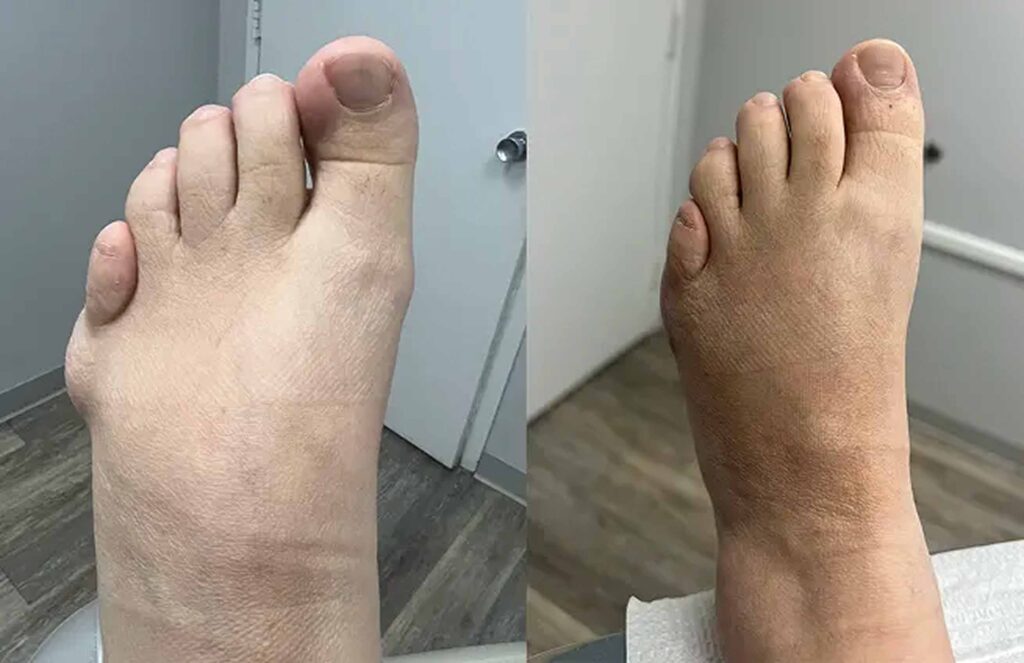
Plantar Fasciitis
Plantar fasciitis is inflammation of the plantar fascia, the fibrous tissue that runs along the arch of the foot to connect the heel bone and ball of the forefoot. Heel spurs are not the same as plantar fasciitis; however, the two conditions are associated.
Since the plantar fascia is subjected to great amounts of impact and pressure while supporting the foot’s arch, it can become inflamed and irritated. In some cases, it begins to deteriorate.
Standing, running, and walking can cause and encourage the pain and inflammation associated with plantar fasciitis. Treatment for plantar fasciitis is the same plan of attack to alleviate heel spurs: rest, ice application, orthotic inserts, exercises and stretches to alleviate tightness and pressure, and anti-inflammatory medications (always check with a doctor before taking any medication). Splinting the foot at night can also help stretch the plantar fascia. Surgery is necessary in some cases.
Plantar fasciitis can be prevented by wearing supportive, properly-fitting footwear, orthotics, heel pads or cushions, and stretching to keep the foot flexible.
Need help treating
plantar fasciitis
?
Schedule Appointment
Need help treating
plantar fasciitis?
Call us today to schedule an appointment.
Ready to schedule an appointment with
Dr. Ricefield?
Explore
Lorem ipsum
Lorem ipsum
Lorem ipsum
Lorem ipsum
Office
Lorem ipsum
Lorem ipsum
Lorem ipsum
Lorem ipsum
Contact
Lorem ipsum
Lorem ipsum
Lorem ipsum
Lorem ipsum
© 2025 Your Next Step. All rights reserved